Are HEPA Air Purifiers Worth Buying for Indian Homes?
Health Hub · Consumer Health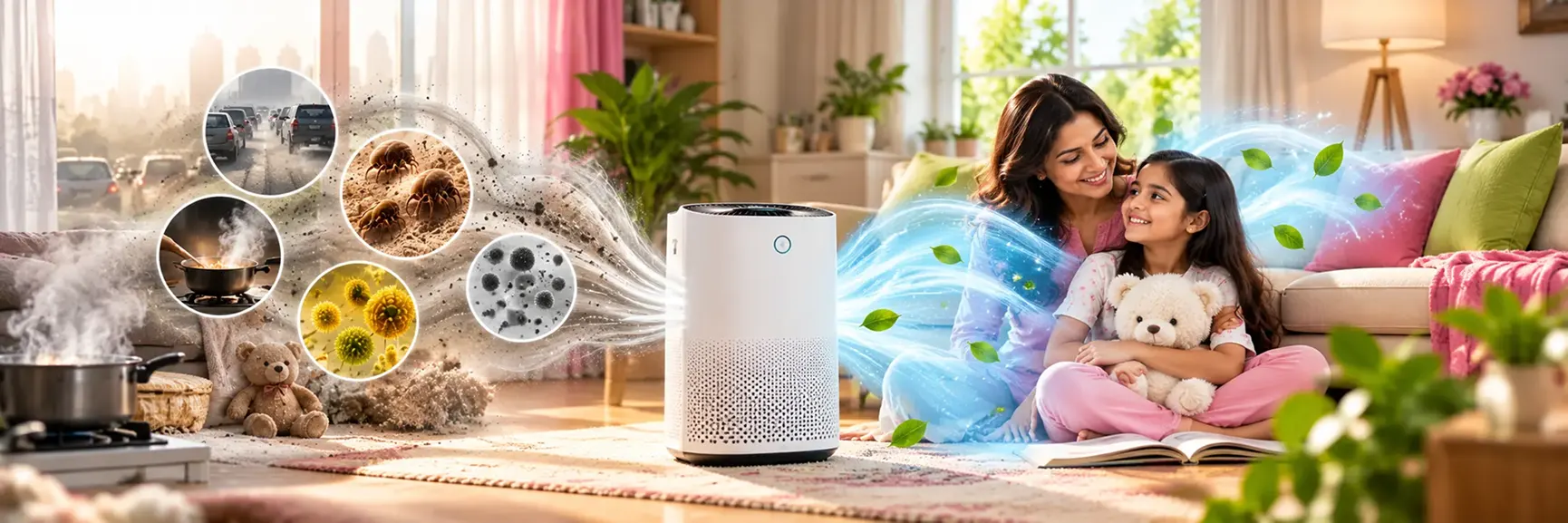
HEPA air purifiers can reduce airborne particles in a room, but HEPA air purifiers cannot eliminate every indoor pollutant. The effectiveness of HEPA air purifiers depends on pollution levels, room size and proper use.
What pollutants are found in indoor air in Indian homes?
Indoor air in Indian homes can contain fine outdoor pollution, cooking smoke, dust, pollen and particles from cleaning or burning incense, even with closed windows. Indoor air quality varies with household activities and outdoor conditions.
How does a HEPA air purifier work?
A well-designed HEPA air purifier captures airborne particles as air passes through the filter. HEPA air purifiers can reduce fine particulate pollution such as PM2.5, smoke particles and some airborne allergens. HEPA air purifiers cannot instantly clean an entire room or remove particles already settled on furniture.
Can HEPA air purifiers remove smells and gases?
HEPA filters capture particles but do not remove most gases. Cooking fumes and odours may require an appropriately designed activated-carbon filter, source control and ventilation when outdoor air is cleaner. HEPA air purifiers cannot resolve damp walls, mould growth or indoor smoking.
How do you choose the right air purifier for your home?
To choose a HEPA air purifier for an Indian home, check the clean air delivery rate (CADR) for the room size, particle-filter quality, replacement-filter cost and noise at the intended operating speed. An air purifier sized for one bedroom may not clean an entire flat. Keep the air purifier’s inlet and outlet clear.
Are air purifiers worth buying in Indian homes?
HEPA air purifiers may be useful in Indian homes exposed to high outdoor PM2.5 or indoor particles, especially when household members have allergies or respiratory problems. Benefits vary. HEPA air purifiers supplement pollution-source reduction, cleaning and appropriate ventilation; avoid devices that intentionally generate ozone.
Disclaimer:
The information provided in this blog is to help you understand about cough, cold, and allergy a little better — it's not a substitute for seeing a doctor. Every person is different, so please check with a healthcare professional for advice specific to you or your child, especially before starting any medication or if symptoms last more than a few days. If you're ever worried, don't wait — reach out to your doctor.References:
- US Environmental Protection Agency, Guide to Air Cleaners in the Home. https://www.epa.gov/indoor-air-quality-iaq/guide-air-cleaners-home
- US EPA, Air Cleaners, HVAC Filters, and Respiratory Viruses. https://www.epa.gov/indoor-air-quality-iaq/air-cleaners-hvac-filters-and-respiratory-viruses