
Can Road Dust and Construction Dust Cause Allergies in India?
Health Hub · Consumer Health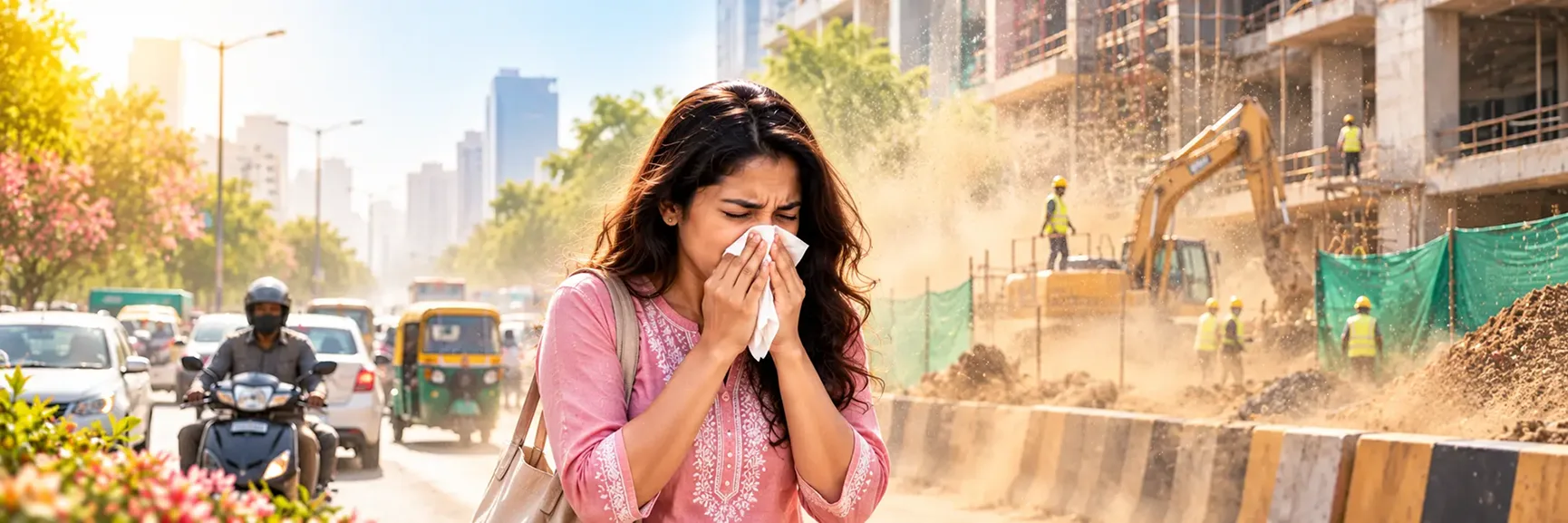
Road and construction dust can irritate the nose and airways and may worsen allergic rhinitis or asthma. Dust-triggered symptoms do not always mean a person has an allergy.
You step outside, pass a busy road or construction site, and suddenly your nose starts itching. Perhaps you sneeze several times, your eyes water, or your throat feels scratchy. In many Indian cities, dust is a daily companion. But is every dust-triggered sneeze an allergy? Not necessarily.
Road dust and construction dust contain a changing mix of soil, crushed building materials and other particles. Traffic can lift settled dust back into the air. Some particles irritate the nose and airways even without an allergy; others may aggravate existing allergic rhinitis or asthma. Understanding the difference helps you respond sensibly.
What Is PM10 in Road and Construction Dust?
PM stands for particulate matter. PM10 refers to airborne particles with a diameter of 10 micrometres or less—small enough to be inhaled. PM2.5 particles are smaller still. Both matter for health, but PM10 is especially relevant when discussing stirred-up road dust and construction activity. Particle size is not the same thing as a diagnosis: a PM10 reading does not tell you whether you personally have an allergy.
Why Is Road and Construction Dust Common in Indian Cities?
A road may look clean in the morning, yet vehicle movement can resuspend settled particles throughout the day. Uncovered soil, construction material handling, demolition and poorly maintained road edges can add more. The mix and contribution of each source differ by city and neighbourhood. Indian government source-apportionment material identifies road and construction dust as important PM10 contributors in multiple cities.
How Can You Tell the Difference Between a Dust Allergy and Irritation?
Allergic rhinitis often brings repeated sneezing, an itchy nose, clear runny discharge and itchy or watery eyes. Dust exposure can also cause non-allergic irritation, including a dry throat or cough. Symptoms alone cannot reliably identify the trigger: dust mites, pollen, mould, infection and air pollution may overlap. A clinician can assess recurring symptoms and decide whether allergy testing is useful.
How Can You Reduce Exposure to Road and Construction Dust?
Check air quality, limit exposure during dusty conditions, and reduce indoor particles through careful cleaning and filtration. These steps can lower exposure to airborne particles.
- Check local air-quality information and consider changing outdoor exercise timing or routes when particle levels are high.
- Near active construction or dusty traffic, limit unnecessary exposure; a well-fitting certified particulate respirator can help filter particles when properly worn.
- Keep windows closed during nearby high-dust episodes, then ventilate when outdoor air is better.
- Clean indoor surfaces with a damp cloth or wet mop rather than dry sweeping dust into the air.
- If using an air purifier, choose a properly sized HEPA-filter unit and maintain its filters; it can reduce indoor airborne particles, not eliminate the outdoor source.
These steps reduce exposure; they do not replace treatment for diagnosed allergic rhinitis or asthma.
When Should You See a Doctor for Dust-Related Cough or Allergy Symptoms?
Arrange a medical review if sneezing, congestion or cough repeatedly disrupts sleep, school or work, or if you need symptom medicines frequently. Seek prompt medical care for wheezing or breathing difficulty. Severe breathlessness, blue lips or difficulty speaking because of breathlessness needs emergency attention. Do not assume a persistent cough is “just dust”; in India, a cough lasting two weeks or longer deserves evaluation, including consideration of tuberculosis.
What Should You Remember About Dust Allergies in Indian Cities?
Indian urban dust is more than a housekeeping nuisance. PM10 from roads and building activity can irritate airways and worsen symptoms in susceptible people. But pollution exposure and a true allergy are not identical. The most useful approach is to reduce exposure, notice your symptom pattern, and seek assessment when symptoms persist or breathing is affected.
Disclaimer:
The information provided in this blog is to help you understand about cough, cold, and allergy a little better — it's not a substitute for seeing a doctor. Every person is different, so please check with a healthcare professional for advice specific to you or your child, especially before starting any medication or if symptoms last more than a few days. If you're ever worried, don't wait — reach out to your doctor.References:
- World Health Organization. Guidance on air pollution and health. https://www.who.int/tools/compendium-on-health-and-environment/air-pollution-and-health
- World Health Organization. Climate change, air pollution, pollen and health (2025). https://www.who.int/publications/i/item/B09412
- US Environmental Protection Agency. Health and Environmental Effects of Particulate Matter. https://www.epa.gov/pm-pollution/health-and-environmental-effects-particulate-matter-pm
- Government of India. Source apportionment studies and dominant sources of air pollution in major cities. https://sansad.in/getFile/annex/270/AU3107_kY9hUJ.pdf?source=pqars
- NHS. Allergic rhinitis. https://www.nhs.uk/conditions/allergic-rhinitis/
- US EPA. Guide to Air Cleaners in the Home. https://www.epa.gov/indoor-air-quality-iaq/guide-air-cleaners-home
- Central TB Division, Government of India. National Tuberculosis Elimination Programme. https://tbcindia.mohfw.gov.in/